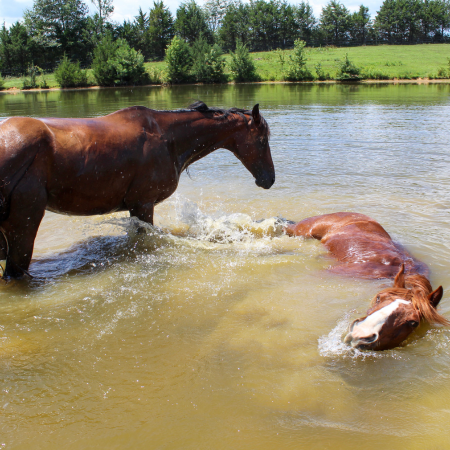
Too hot to trot; Managing horses in hot weather
Date: 1 Jan 2026
Hot weather poses serious risks to horses in New Zealand, with heat-related illness common in summer and largely preventable. High humidity, strong sun, limited airflow, and exercise or transport in warm conditions can all impair a horse’s ability to regulate body temperature.
Heat Stress and Heat Stroke
Horses generate significant heat during work and rely on sweating and increased respiration to cool themselves. When cooling fails, body temperature rises, leading to heat stress. Early signs include rapid breathing, elevated heart rate, excessive sweating, dullness, and slow recovery. Severe cases may show weakness, incoordination, dark gums, or collapse. Heat stroke is a medical emergency and can be fatal without prompt intervention. Prevention includes exercising during cooler hours, providing shade and ventilation, allowing recovery time, and actively cooling with water after work or travel.
Dehydration
Sweating during summer exercise or travel can lead to significant fluid and electrolyte losses. Without replacement, dehydration can impair performance, trigger muscle problems, colic, and slow recovery. Subtle signs include reduced appetite, dry gums, or decreased manure output. Prevention requires constant access to clean water and encouragement to drink. Electrolytes can replace sweat losses, while adding salt to feed stimulates thirst and supports hydration.
Sunburn
Horses, especially those with pink skin or white markings, are vulnerable to sunburn. Protection includes shade, limiting exposure during peak UV hours, and applying sunscreen to sensitive areas such as the nose, eyelids, and ears. UV-protective fly masks also help shield the face and eyes.
Colic
Hot, dry conditions increase the risk of colic. Dehydration slows gut motility, while dry forage can cause impactions. Prevention involves ensuring water availability, encouraging intake, feeding soaked or moist feeds, and maintaining consistent routines. Monitoring faecal output for changes in frequency or consistency can provide early warning.
Summary
Managing horses in hot weather requires planning and observation. With ample water, thoughtful adjustments to routines, and close attention to small details, most horses cope well with summer. Keeping them cool and hydrated ensures comfort, faster recovery, and fewer health risks - making the season safer and more enjoyable for horses and their owners.
Dr Izzy Oakley BVSc MRCVS
Back...